Blog home / Is micro cruising for me? Your questions answered
Bare feet on the deck, remote islands drifting into view, freshly cooked meals prepared daily by an onboard chef, and the thrill of exploring somewhere entirely new each morning. Sounds appealing? Welcome to the world of micro cruising.
First things first: what is a micro cruise?
Forget everything you picture when you hear the word "cruise", because this isn't your average type.
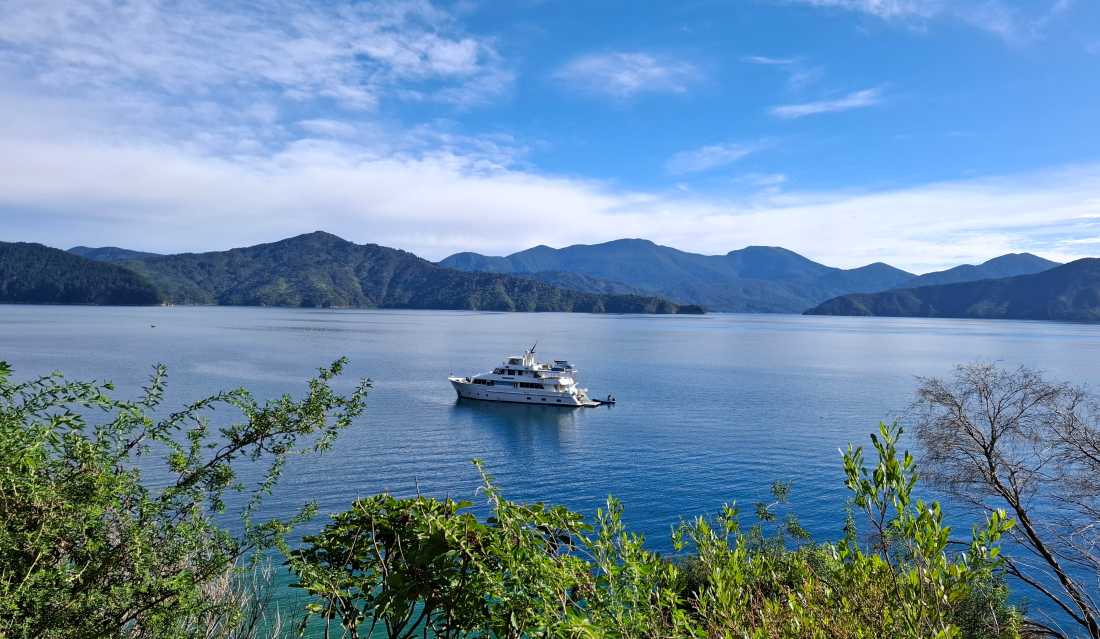
You're aboard a small, intimate vessel of 30 guests or fewer and have the flexibility to slip into hidden harbours and reach remote shorelines that bigger ships simply can't reach. With a group this small, your crew will quickly feel like old friends. The atmosphere is relaxed, personal – far closer to a private charter than anything you'd associate with a traditional cruise.
Connections with fellow travellers happen naturally too; there's something about shared sunrises, spontaneous dolphin encounters, and beach barbecues that brings people together quickly.
The small ship becomes your home base for adventure, one that relocates itself overnight so you wake up somewhere extraordinary – a different bay, cove, or island. Zodiac excursions are regularly part of the itinerary, and so are the daily activities that take you deeper into your destination.
Best of all, you unpack once while the opportunity to explore feels endless.
Do I need to be super fit or experienced?
This is the question we get asked most, and the honest answer is not necessarily.
Our micro cruising itineraries are designed to cater to a wide range of activity levels, from guests who want to be in the water or on a trail for most of the day, to those who are perfectly happy reading on deck one day and joining in when the mood strikes.
Our expeditions attract curious, active travellers who want to get out there — into the water, onto the trails, into the culture. So activities range from gentle zodiac cruises and snorkelling to more challenging kayak days and hikes, and most require no prior experience at all. What does matter is a willingness to give things a go.
You should, however, still be comfortable in the water, so a swimming ability is important, especially for snorkelling.
Boarding tenders and moving around the vessel requires a reasonable level of mobility and balance, particularly in variable weather or sea conditions, and shore landings may involve uneven terrain, wet landings, or light scrambling. Our crew is always on hand to assist, but a base level of fitness and confidence in the water will go a long way.
Not sure if a particular trip suits your fitness level or interests? Get in touch with our team to find the right fit.
What does a typical active day look like?
For our small ship adventures, the crew will share the day's plan — what's happening, when, what to bring (reef shoes? camera? just your swimmers?). From there, the day unfolds naturally.
On a snorkel and kayak-focused trip, you might:
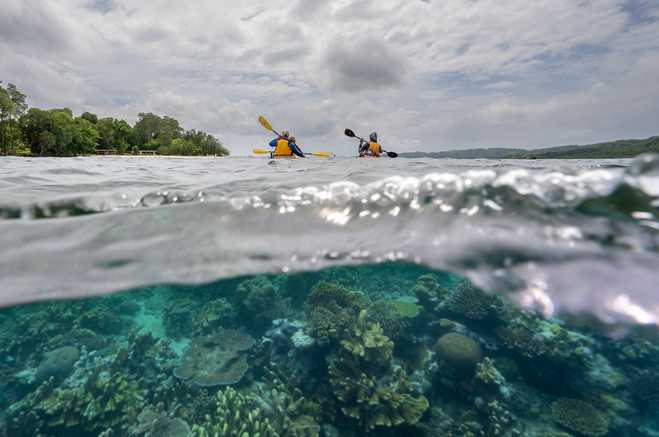
- Head out for a kayak session in the morning, paddling between limestone islands or along a reef edge.
- Stop whenever something catches your eye and slip into the water for a snorkel.
- Return to the boat for a fresh lunch.
- Head back out in the afternoon for another snorkel, a beach walk, or a tender trip onshore.
- Watch the sun go down from the deck with a cocktail in hand.
Guests could spend a number of hours in and around the water each day on snorkel-focused itineraries, but how much of that you participate in is entirely up to you.
How flexible is the itinerary?
This is one of the greatest joys of travelling by small ship. Compact and highly manoeuvrable, these vessels can navigate shallow waters, weave through narrow channels, and anchor in hidden coves off-limits to larger ships.
That physical freedom translates directly into itinerary freedom. The captain can adjust the route on the fly.
If the weather is spectacular somewhere, you stay longer. If conditions shift, the boat can move to a better spot. And if a pod of dolphins appears on the horizon, the engine slows, the crew leans over the bow, and everyone stops what they're doing. The opportunity for spontaneity is one of the most memorable parts of the whole experience.
I'm a first-time kayaker. Is that a problem?
Not at all. Most itineraries are designed to be accessible to first-timers. You'll get a briefing and a short practice run before heading out, and the guides are with you throughout. The more confident you feel on the water, the more you'll enjoy every minute of it.
However, it is best to read the trip itinerary beforehand to get an idea of the paddling program, as some trips may have longer days with up to 20 kilometres of kayaking.
If conditions change or you need a break, a tender can take you to a snorkel spot instead or back to the boat, while the group paddles on. The flexibility is always there.
What if I'd rather snorkel than kayak?
On days when a long kayak is planned, the tender can take you directly to a snorkel site instead. Many of the best snorkelling spots in many of our warm-water itineraries happen right off the beach or boat anyway, so you won't miss a thing. And in places like Palau, the underwater world is so spectacular — electric corals, octopuses, reef sharks, turtles — that you could happily spend your entire trip with a mask and snorkel and be completely satisfied.
What about diving? Do I need to be qualified?
Yes. Diving on these expeditions requires existing certification. There are no learn-to-dive programs on board. Gear is available to hire, and the number of dives you do (and what you pay for them) is flexible depending on weather and visibility.
If you're a qualified diver, some destinations demand more experience than others. Around Komodo, for instance, the currents are strong and suit more advanced divers. Other areas are more forgiving.
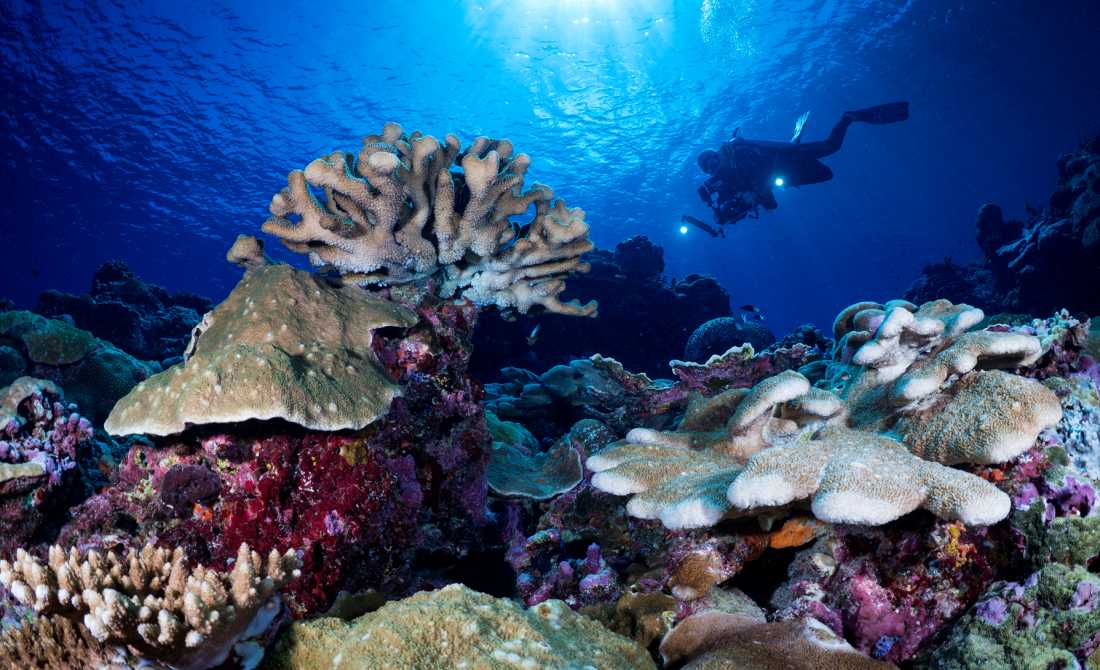
Not a diver? You won't feel like you're missing out. In the Coral Triangle — which spans Indonesia, Palau, and the Philippines — the snorkelling alone is extraordinary. Stingless jellyfish lakes, whale sharks at traditional fishing stations, dolphins riding the bow wave. So you can experience the beauty of the marine life at every depth.
I'm a bit nervous about swimming in open water. Is that okay?
It's more common than you might think, even if you can swim. Inflatable noodles are available on board for anyone who wants a bit of extra support in the water — there's no shame in hanging on and drifting with the current while the reef slides past beneath you. Life jackets are also available. The crew is attentive and experienced, and safety is always the priority.
What do I need to pack?
Less than you think, especially when travelling to a warm-water destination. For tropical voyages, you could be spending the majority of your time in swimmers, on deck in a sarong, or in quick-dry gear for hikes. So pack light. Invest in breathable, fast-drying clothes. Bring a good rash vest, reef-safe sunscreen, and a decent underwater camera if you have one. The one thing worth splashing out on? A great snorkel mask, though gear is provided on snorkelling itineraries.
For cool-water destinations, layering is important, but a detailed guide and packing list can be supplied prior to your departure.
How do I pick the right expedition for my pace?
This is where it pays to think honestly about what kind of traveller you are.
If you're after immersive, high-activity adventure: Look for dedicated kayaking or diving itineraries. These attract like-minded guests and are built around full days of activity. Solomon Islands and Komodo are both excellent for this.
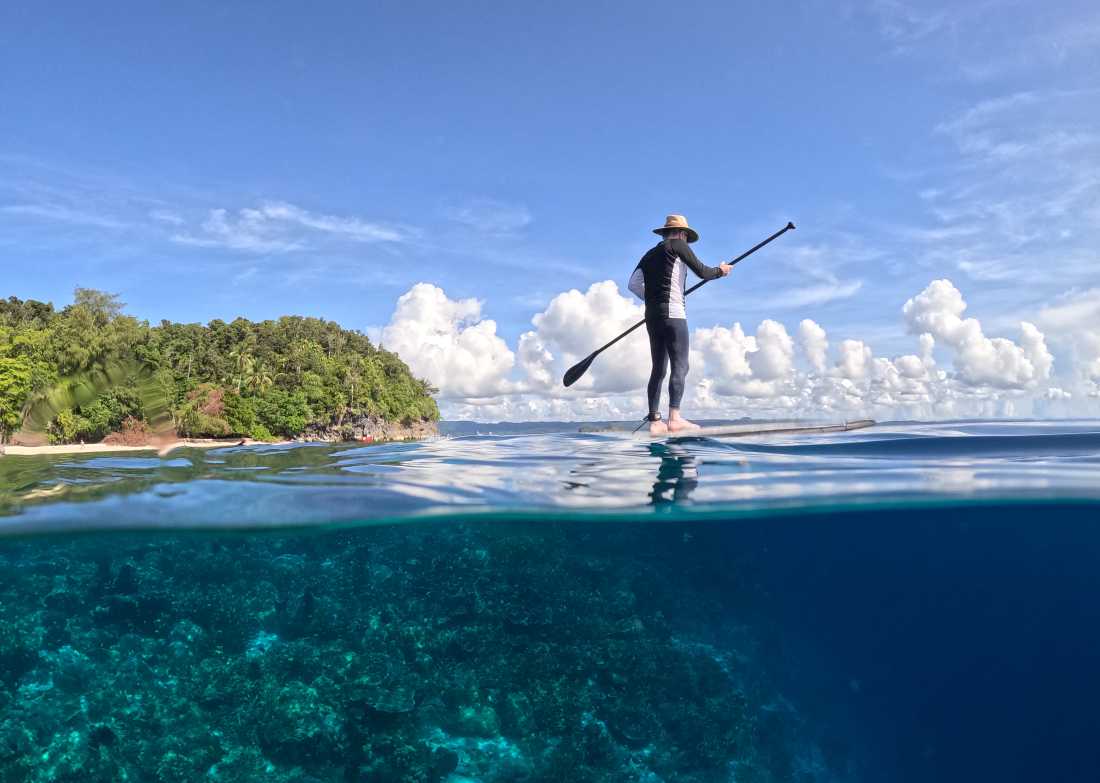
If you want a softer introduction: Choose a snorkel-focused itinerary like the Maldives or a destination like the Raja Ampat, where the activity is varied — kayaking, snorkelling, cultural visits, WWII history — and the pace feels exploratory rather than high-intensity. Our wildlife-focused itineraries are also more gently paced.
If you want flexibility above all: All of our itineraries are built around choice. But if you know you'll want to mix active days with quiet ones, let us know when you book.
Our team can help you match with the right vessel, itinerary, and group vibe.
At the end of the day, a micro cruise isn’t one fixed experience. It moves at your pace, and the ocean has a way of surprising you regardless.
Browse our active micro cruise expeditions →