Weather
With the exception of tropical humidity, Chile’s extreme latitudinal span means that the country encompasses nearly all climates. The Andes Mountains, the Pacific and South Pacific Oceans, and the cold Humboldt Current from Peru are all major influences on Chile’s climatic patterns.
Patagonia’s southern coastal position leaves it exposed to the intense winds that circle the Antarctic land mass. As such, the climate of Patagonia is unpredictable and it is necessary to be well prepared with good quality clothing. The summer season spanning November to March, experiences day time temperatures of between 8-20 degrees Celsius and in the evenings the temperature can easily reach zero. By Andean standards, the Patagonian Mountains are low in altitude, but they capture virtually all the south-west air borne moisture cladding their summits with snow, and leaving the leeward side, the Patagonian plains, in a severe rain shadow. This makes for some very interesting contrasts in the landscapes.
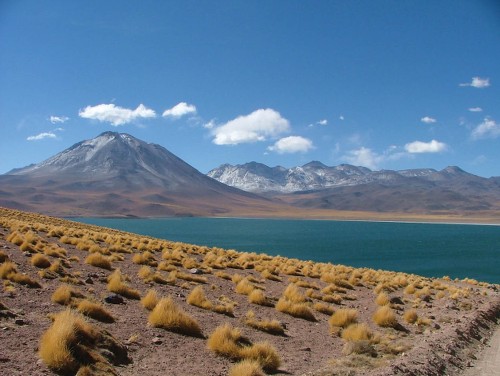
Most of northern Chile is desert; the central parts of the country, where the bulk of the country’s population and larger cities are found (including the capital of Santiago), are temperate, humid and suitable for cultivation, similar to the Mediterranean; and southern Chile is a beautiful but largely inhospitable region subject to cold, wet and windy conditions. Temperatures drop and precipitation rises fairly consistently as you move from the dry extreme north towards the humid extreme south.
Moderate daytime temperatures, cold nighttime temperatures and a lack of rain or permanent vegetation typify the arid northern desert. Even along the coast, humidity generally develops only to coastal fogs (garúa) rather than rain.
Central Chile is blessed with temperate Mediterranean conditions, making it a very productive agricultural region for growing grapes, fruits, grains and vegetables. Winters are cool and humid, bringing rains from May to August (especially the wettest months of June and July); spring months see southwesterly winds and clear skies; and summer and autumn months are warm and dry.
Southern Chile is subject to the influence of cyclonic depressions, permanent westerlies and the polar front, causing lower temperatures and abnormally high rainfall. Intense storms and squalls are frequent around Cape Horn.
Average monthly temperatures in the Santiago area range from around 19.5°C (67°F) in the summer (Jan-Feb) to around 7.5°C (45.5°F) in the winter (Jun-Jul).