Blog home / Snorkelling Techniques & Safety: A Beginner's Guide
Snorkelling offers far more than just a glimpse of the underwater world. It’s an invitation to reconnect with nature, to float in serenity while the marine life unfolds around you in dazzling colour and form.
With On Water Expeditions, each snorkelling journey becomes part of a larger adventure, whether that's sailing through Indonesia's incredible archipelago of islands, meeting local communities and exploring a marine paradise few experience.
If you're looking to connect with the marine world, snorkelling is an accessible and rewarding activity that requires no prior experience apart from being a competent swimmer; basic water confidence also helps. It welcomes explorers of all ages and fitness levels.
Snorkelling equipment
Unlike scuba diving, which involves air tanks and deeper descents, snorkelling allows you to breathe naturally through a snorkel tube while staying buoyant at the surface.
The main gear needed is:
- Mask – Provides clear vision underwater. A proper seal and comfort around the face are essential. Test it by pressing the mask to your face without the strap and inhaling slightly through your nose; it should stay in place.
- Snorkel – A breathing tube that allows you to inhale air while floating face down. You want to choose a snorkel with a purge valve for easy clearing and a splash guard to reduce water intake. Fins – Extend your swimming reach and efficiency. This can be optional to wear.
- Fins – Open-heel fins with adjustable straps are great for varied conditions (cold water may need booties). Full-foot fins work well in warm, calm waters.
- Optional extras – Gloves, booties, and rash guards for comfort and sun protection.
When you sail with On Water Expeditions, all snorkelling equipment is provided onboard, which are carefully maintained and ready for use.
Our experienced tour leaders and friendly crew guide every guest through the process of fitting, adjusting, and using the gear, ensuring your first moments in the water are comfortable, safe, and unforgettable.
Additionally, our experienced crew aim to stop at locations with the best visibility, providing you with a greater opportunity to spot coral colonies, sea turtles, or reef fish as they go about their daily routines in the clearer blue shallows.
What's the difference between snorkelling, scuba diving and freediving?
Snorkelling offers freedom, lightness, and immersion without the complexity of an air tank or the need for deeper descents, like those required for scuba diving. Using a snorkel allows you to breathe through the tube and observe the underwater world from the surface while staying buoyant. This is an excellent option for beginners.
Freedivers may plunge deeper for short periods, typically with a mask, but must hold their breath as they descend below the water's surface.
Scuba diving requires a tank of compressed air to go underwater for longer and deeper exploration. Training and certification are required (e.g. PADI Open Water) to participate in this activity.
Snorkelling techniques
Once equipped, it’s all about relaxation and rhythm.
- Body position: Float horizontally, keeping your face in the water, and move slowly and smoothly.
- Finning: Use gentle kicks from the hips, not the knees.
- Clearing the snorkel: A firm exhalation removes any water that enters the tube.
- Surface diving: Take a deep breath, tip your body downward, and glide beneath the surface for a closer look — always within safe depths.
- Breathing control: Slow, steady breaths help you stay calm, conserve energy, and extend your time in the water.
With a little practice, snorkelling can easily be taken up.
Snorkelling Safety
Our onboard crew conduct safety briefings before every snorkel session and are always in the water alongside guests, ensuring your experience is as safe as it is awe-inspiring.
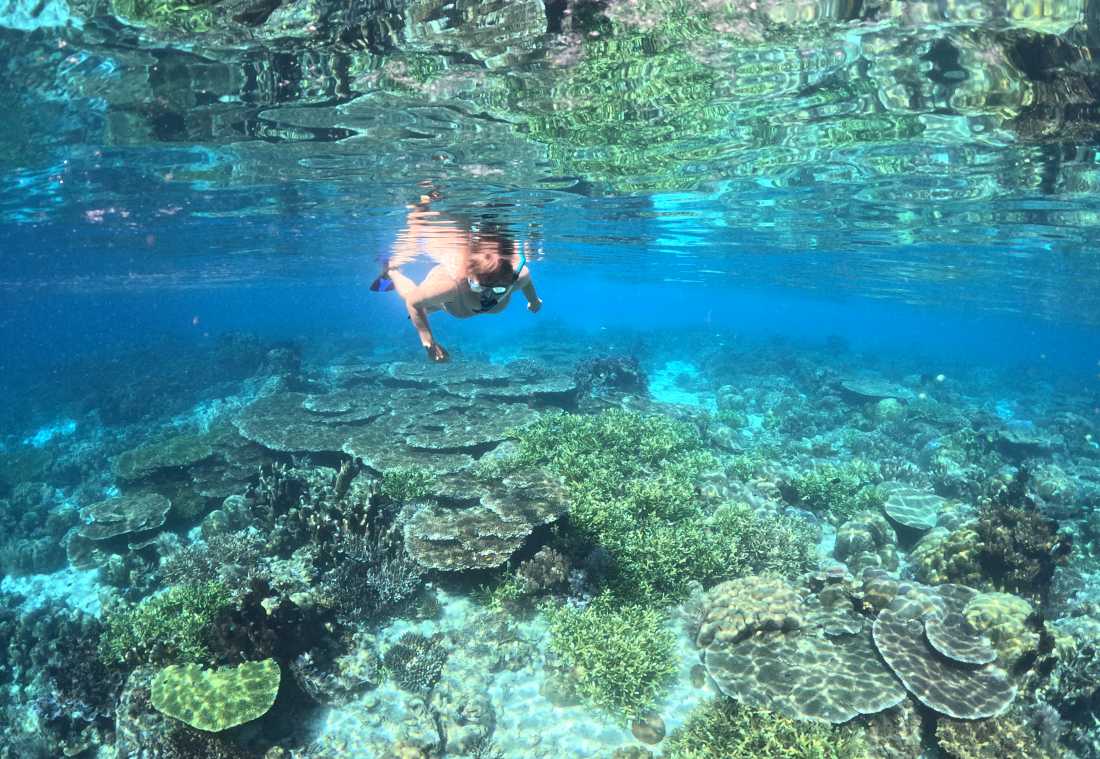
To ensure you have an enjoyable experience while respecting the environments you visit, follow these key safety and awareness guidelines:
- Pre-snorkelling checks: Ensure your mask seals properly, fins are secure, and the snorkel is clear.
- Buddy system: Always snorkel with a partner. Keep an eye on each other, especially in open water.
- Sun protection: Apply reef-safe sunscreen, wear a rash guard, and stay hydrated.
- Ocean awareness: Learn about local currents, tides, and weather conditions before entering the water.
- Respect marine life: Observe, don’t touch. Avoid standing on coral or chasing animals. Responsible snorkelling is essential to protect these treasures. Never touch corals, avoid kicking up sand, and give marine animals plenty of space.
By following these principles, every snorkeller becomes a steward of the sea.
Ready to dive in?
Snorkelling opens a world to anyone with a sense of curiosity and wonder, with no tanks or heavy equipment. So don your mask, fins, and feel the rhythm of your own breathing and experience the magic that waits just below the surface. Check out our top Indonesia trips that explore some of the best snorkelling spots →
Adapted from original words by Gavin Gallagher.