Blog home / A week in Palau: Kayaking, snorkelling and the trip I can't stop talking about
I'd never really heard of Palau before I spent a week aboard the Palau Siren last March. I've travelled all over the world, and this one's up there as one of my favourites.
One of the unexpected highlights was how quickly everyone bonded, and with just 16 guests on board, it didn't take long for the group to get to know one another. By the end of the first day, it already felt like I was travelling with friends rather than strangers.
Where is Palau?
Firstly, to find Palau on the map, it sits close to the Philippines. It's a small island nation in Micronesia, located in the western Pacific and home to fewer than 18,000 people. Often dubbed the "Underwater Serengeti" or an "underwater wonder of the world", this tiny yet richly biodiverse nation comprises of 300 or so islands scattered across a total land area that's around 0.01% the size of Australia. It may be small in comparison, but it is teeming with incredible marine ecosystems and sights.
Getting on board
The 40-metre wooden Palau Siren vessel is handcrafted from ironwood and teak, built by divers for divers back in 2012. One of the eight cabins became my home for the week, equipped with air conditioning and an ensuite. The dive deck has its own storage and rinse tanks, so all your kayaking and snorkelling gear stays out of your cabin. There's also the saloon’s cocktail bar, which became something of a ritual to visit in the evenings.
Paddles at the ready
We got straight into the action right off the paddle. We had a briefing on land, got fitted out with kayaks, did a short practice paddle, and then we were off. This is the bit that surprised me most: you don't need any kayaking experience to do this.
I went into this trip with more nerves than I probably needed, but what I found when heading out on the water was that I could set my own pace. It was easier being in a double kayak to help share the effort during longer paddles, and I could take turns resting if I ever needed a break.
It helps if you've paddled before, but it's genuinely not essential. What you do need is a reasonable comfort level in the water and a willingness to just go with it.
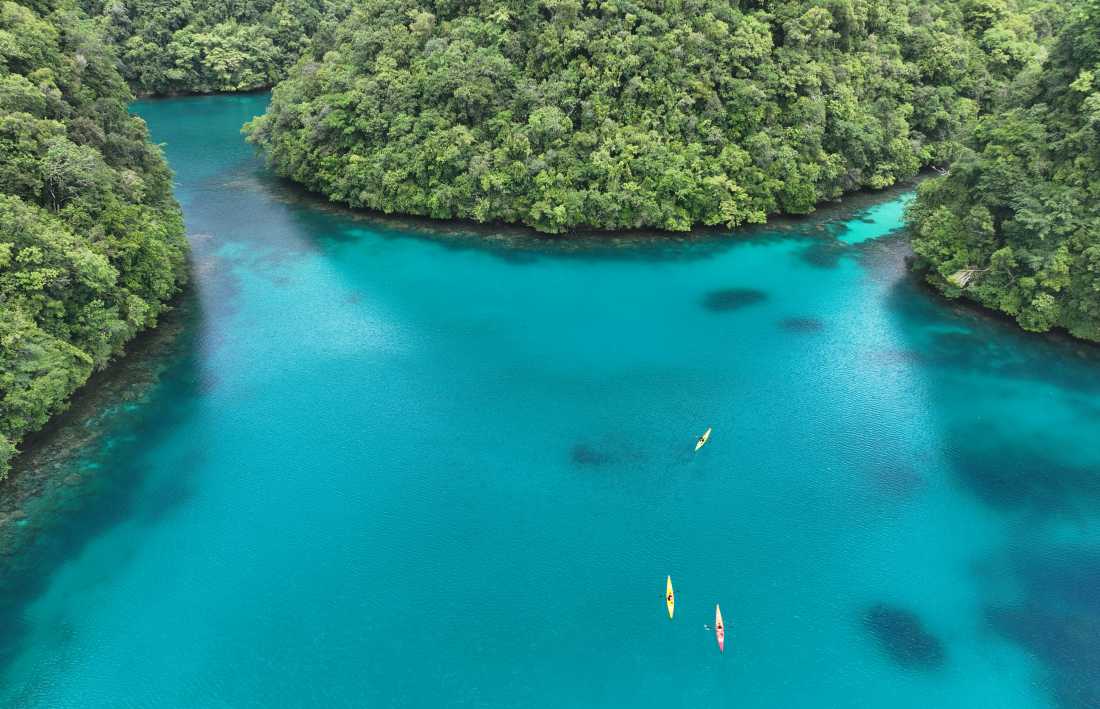
What makes Palau such a good place to learn is the sheer variety of water you paddle through in a single session — open water one moment, then winding between towering rock islands the next, close enough to watch the birdlife along the cliffs.
Most days meant around four to six hours in the kayak across two outings, but the water rarely felt rough, and if you wanted to stop, you could. The tender was always nearby to collect anyone who'd had enough, or to ferry snorkelling gear ahead so you could stop paddling and jump straight in.
The water is the real headline act
Every kayak carried snorkel gear, because you never knew when you'd want to stop. And you'll want to stop constantly. From our kayaks, we spotted young sharks in the shallows, an occasional turtle gliding past, and more fish than I could count.
One afternoon, I found myself hovering over an octopus that kept extending a tentacle every time I reached out. It was doing a slow, curious little dance that went on for a few minutes before it lost interest in me. If there's one site to remember the name of, it's Ngemelis Wall, better known as the Big Drop-Off – the one Jacques Cousteau himself rated as the best walled dive in the world. It drops just over 300 metres to the sea floor, and even snorkelling the top of it in 30-metre visibility, you're surrounded by incredible reef life.
We also drifted through Ulong Channel on another day, an easy current-assisted snorkel where the fish just kept coming. There were schools of every size, and if you're lucky, a turtle or two threading through them.
Ulong Island itself is worth a stop on land and in the water. There's a UNESCO-listed village site there, mysteriously abandoned for over 500 years, which was tucked into the forest just back from the beach.
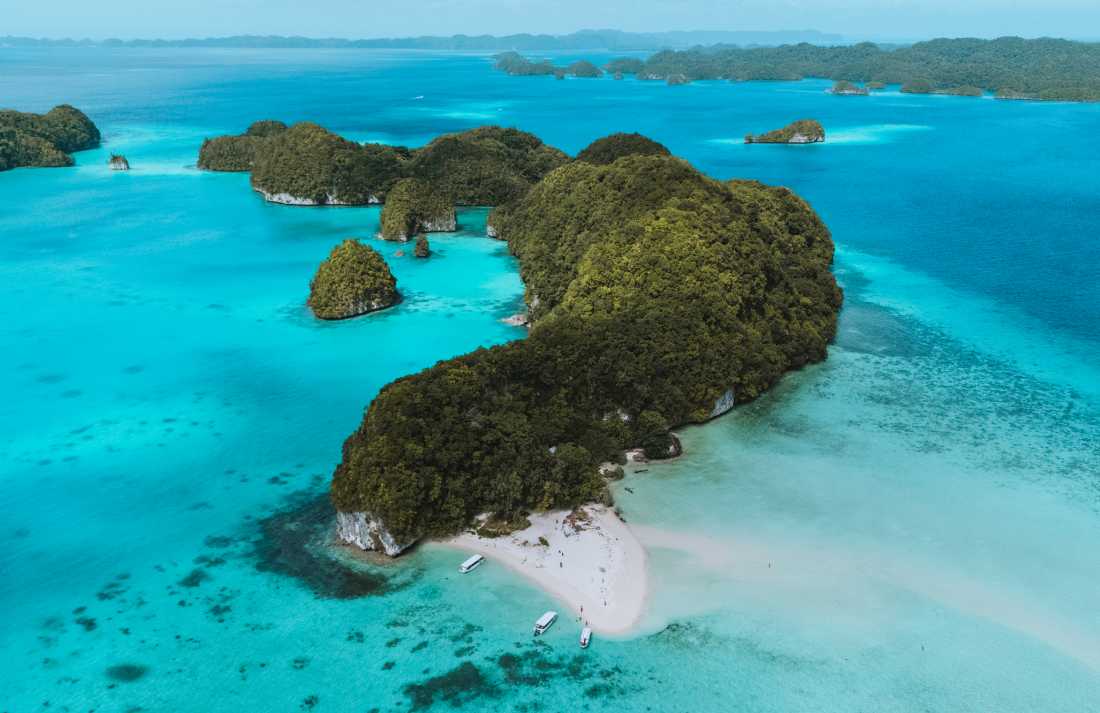
Free diving to a WWII wreck
We visited Ngchus Beach, a small former Japanese base during WWII, where a crashed fighter plane sits in shallow water just off the sand. I stayed on the surface and watched my husband free-dive down for a closer look. We also paddled out to Mecherchar Island, also called Eli Malk, for a short jungle walk to a Yapese stone money quarry. We saw perfectly preserved examples of the world's largest money discs sitting quietly in the forest, exactly where they were carved centuries ago.
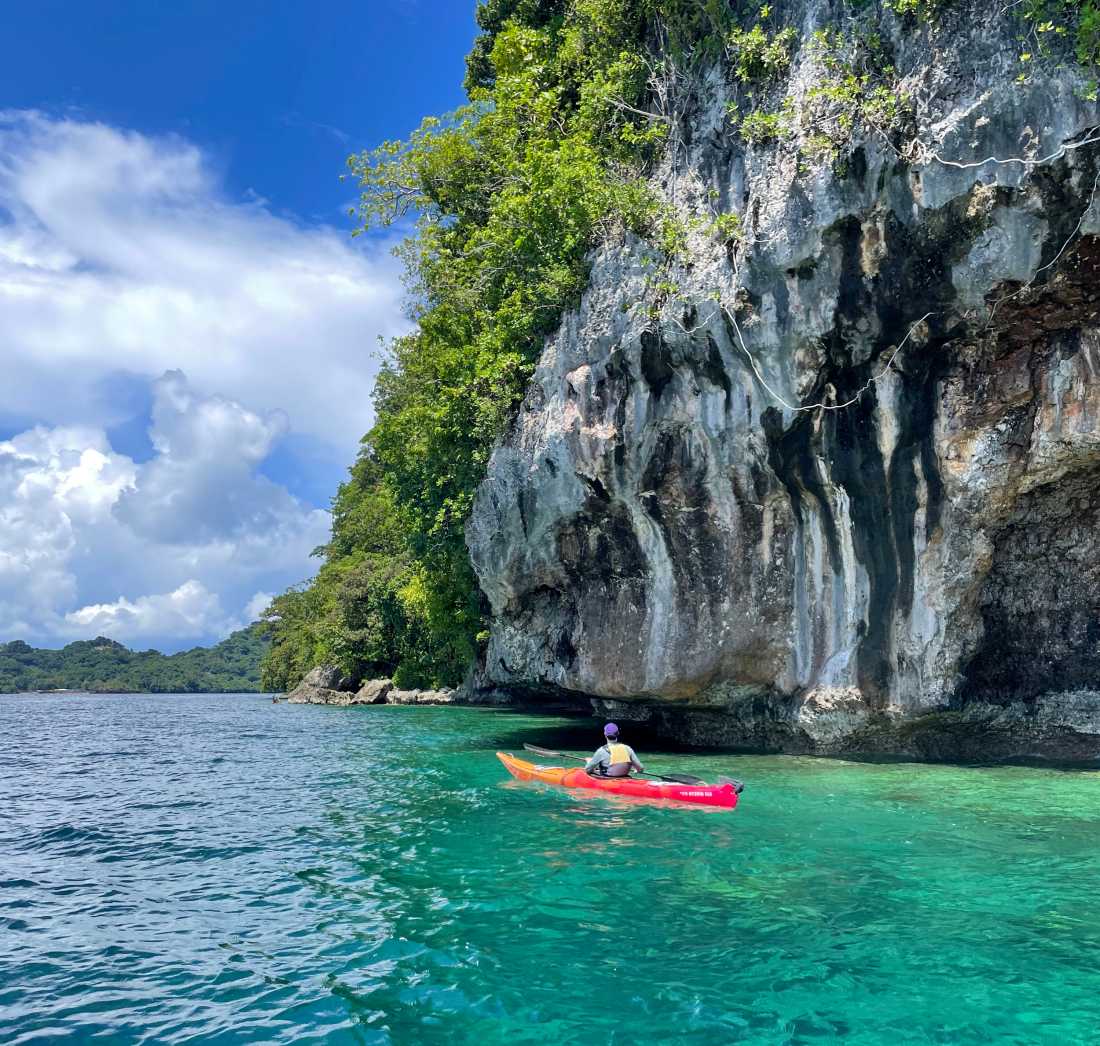
Afterwards, we paddled under the limestone overhang of Kingfisher Arch, which offers a lovely spot to cool off for a swim. But the day wasn't over with another afternoon snorkel at Coral Garden, known for its outstanding plate corals.
Learning the island's history, not just its water
Palau isn't only about what's under the surface. Before we'd even left Koror, every visitor is asked to sign the Palau Pledge – stamped right into your passport – committing to protect the country's natural environment and respect local traditions for the length of your stay. It's a small thing, but it definitely sets the tone for the whole trip.
Evenings on board were informal, but our guide would run through the day's route and give a proper talk on what we'd seen. We had stories about the earliest seafarers and their migrations across the Pacific, and other evenings were filled with the history behind the WWII wrecks we'd snorkelled over that afternoon.
By the end of the week, I knew far more about Palau than I'd expected to learn on what I thought was "just" a kayaking and snorkelling trip.
Food, comfort, and the small stuff that matters
Meals were a lovely highlight. There was always a protein, carbs, vegetables and a salad, with dietary requirements catered for without any fuss. It's easy to underestimate how much good food matters after a day of paddling and swimming, but it made a real difference to energy levels for the next day's activities.
For anyone worried about staying afloat for long stretches, inflatable noodles were available on board, along with life jackets for anyone who wanted extra reassurance in the water. Nobody was left without support, whether that meant hanging onto a noodle and drifting with the current or being picked up early by the tender.
What stays with you
Our final evening was a beach barbecue with fairy lights strung up, proper table settings, cocktails, and some dancing in the sand. It was the perfect note to end on.
It's hard to pinpoint a single favourite moment during my time in Palau, but it's the collection of all the big and small moments that linger long after you've left. I'd never even heard of Palau before I went; now I'm singing its praises to everybody I can speak to about it.
So if you're even considering a trip like this, take the plunge and then let me know what moments stayed with you.
Check out the full Palau expedition - and if you've never kayaked before and are wondering if you're cut out for a trip like this, read our companion guide on kayaking in Palau.
Special thanks to Pam Dewar for sharing her experiences from her journey through Palau.