
Explore Indonesia by traditional sail boat
Blog home / What Makes Travelling on a Phinisi Sailboat So Special
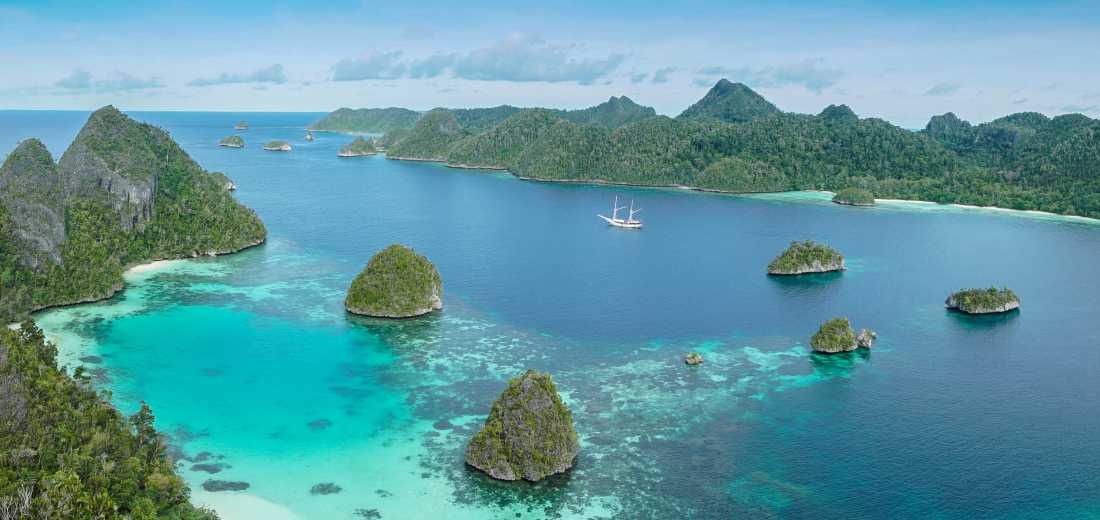
Further east of Indonesia, you'll find jungle-covered islets that dot a remote and coral-diverse archipelago. From the water, you can best experience these islands and rich coral reefs with a phinisi boat at the heart of the experience.
A phinisi liveaboard combines traditional craftsmanship, warm Indonesian hospitality and a relaxed pace of travel with a small group.
It’s an immersive style perfect for anyone wanting to disconnect, snorkel vibrant reefs and enjoy Indonesia’s remote island landscapes from the comfort of a beautifully built wooden vessel.
What is a phinisi boat?
A phinisi (also known as 'pinisi') traces its origins to South Sulawesi, where the Bugis and Makassarese people have been master shipbuilders and sailors for generations.
Their seafaring reputation was earned on these very vessels, which once carried spices, textiles, and stories across the archipelago and beyond. Shipbuilding remains a communal craft where entire villages come together to construct a phinisi, each piece shaped by hand using skills passed down orally.
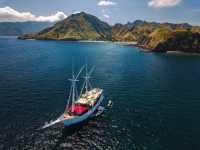
Phinisi boats are built almost entirely from Indonesian hardwoods, often ironwood or teak, chosen for their strength and durability. Unlike large floating cruise resorts built for mass tourism, a phinisi is designed to travel comfortably through Indonesia’s shallow reefs and island channels.
Modern phinisi vessels combine their classic silhouette, featuring twin masts, sweeping sails, and a curved hull shape, with today’s creature comforts.
Many are fitted out as small expedition boats with:
- Cosy cabins - housing no more than 24 guests, some even holding fewer than 12 people.
- Open decks for watching the water
- Lounge and dining spaces
- Snorkelling or kayaking gear available
UNESCO’s recognition of the phinisi as an Intangible Cultural Heritage of Humanity highlights the vessel's significance as an emblem of Indonesia’s role as a maritime crossroads.
The sailboat experience: why choose a phinisi adventure?
Sailing on a phinisi feels unhurried and connected to the environment. With small passenger numbers, with guests of 24 or fewer, the experience is intimate. The vessel becomes your base and steady guide, carrying you through a region where the ocean and local cultures are closely linked.
Enjoy time to stop for dolphin sightings, gain easy and regular access to islands fringed with reefs and beaches, experience fresh air, wooden decks, and sunrises you can watch from bed.
Because itineraries are flexible, the captain and crew can often change course for calm coves, wildlife encounters, or head to protected snorkelling sites.
Islands and reefs of the Coral Triangle
The phinisi’s natural home is the Coral Triangle, the richest marine environment on Earth. Here, the boat slips between uninhabited islands where white sand meets jungle and time seems to stand still. Beneath the waterline, coral reefs burst with colour and life, manta rays glide past, reef sharks patrol, and schools of fish shimmer like quicksilver in the current.
Phinisi boats are especially common in:
- Raja Ampat – part of the Coral Triangle, home to some of the richest reefs on Earth.
- Komodo National Park – islands, pink beaches, and manta rays.
- West Papua – quieter, more remote corners with dream-like seascapes.
The people of the Phinisi
Though modern crews may come from all over the world, the captains and engineers on phinisi vessels are still almost always Bugis or Makassarese. Their skills are passed down through generations and honed by years at sea. For them, navigation is more than just charts and compasses; it is instinct, tradition, and a deep respect for the ocean.
While modern crews may be international, captains and engineers on phinisi vessels are still almost always Bugis or Makassarese. Their skills are passed down through generations and refined through years spent on the water. Navigation for them draws on both formal training and long-standing maritime knowledge that extends beyond charts and compasses; it is rooted in instinct, tradition, and a deep respect for the ocean.
Crews also take real pride in serving dishes inspired by the regions you’re sailing through with their fresh produce.
Sailing with such a crew offers a glimpse into a seafaring tradition that has connected Indonesia’s islands and communities for centuries.
Join an Indonesia sailing adventure →